* Selected shaders from my development work
Blended PBR Terrain Workflow – Grass / Gravel Transitions
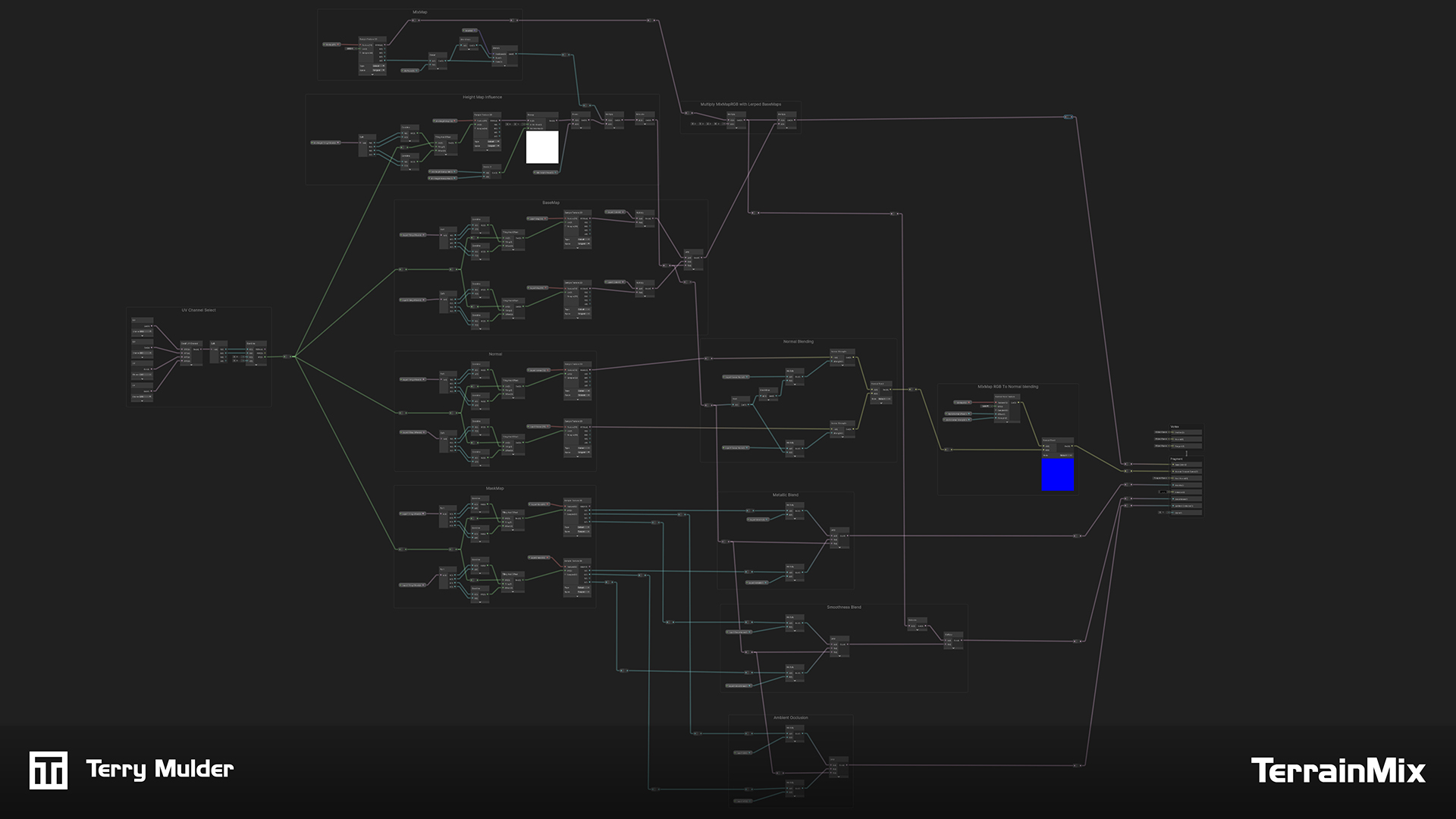
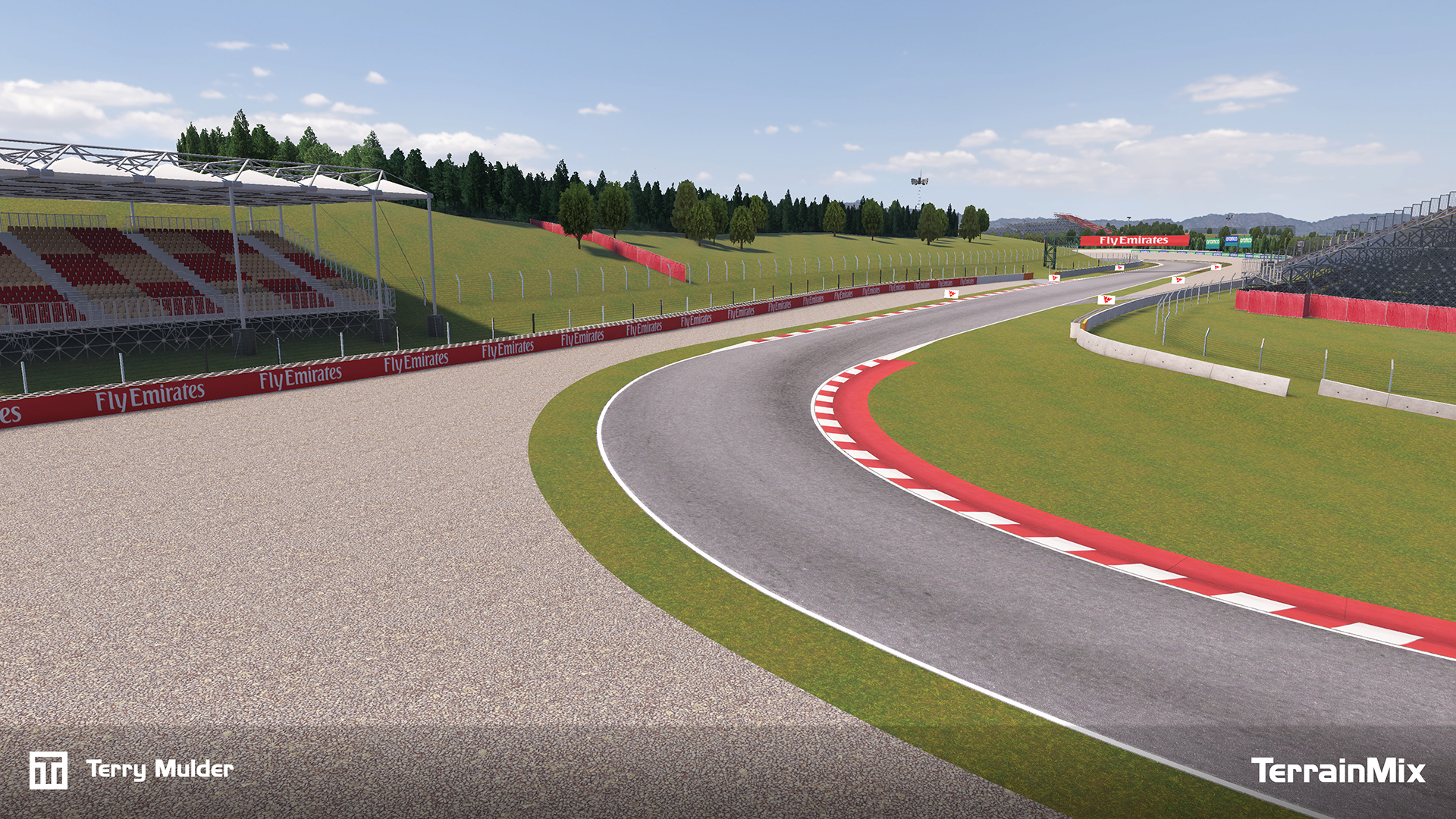
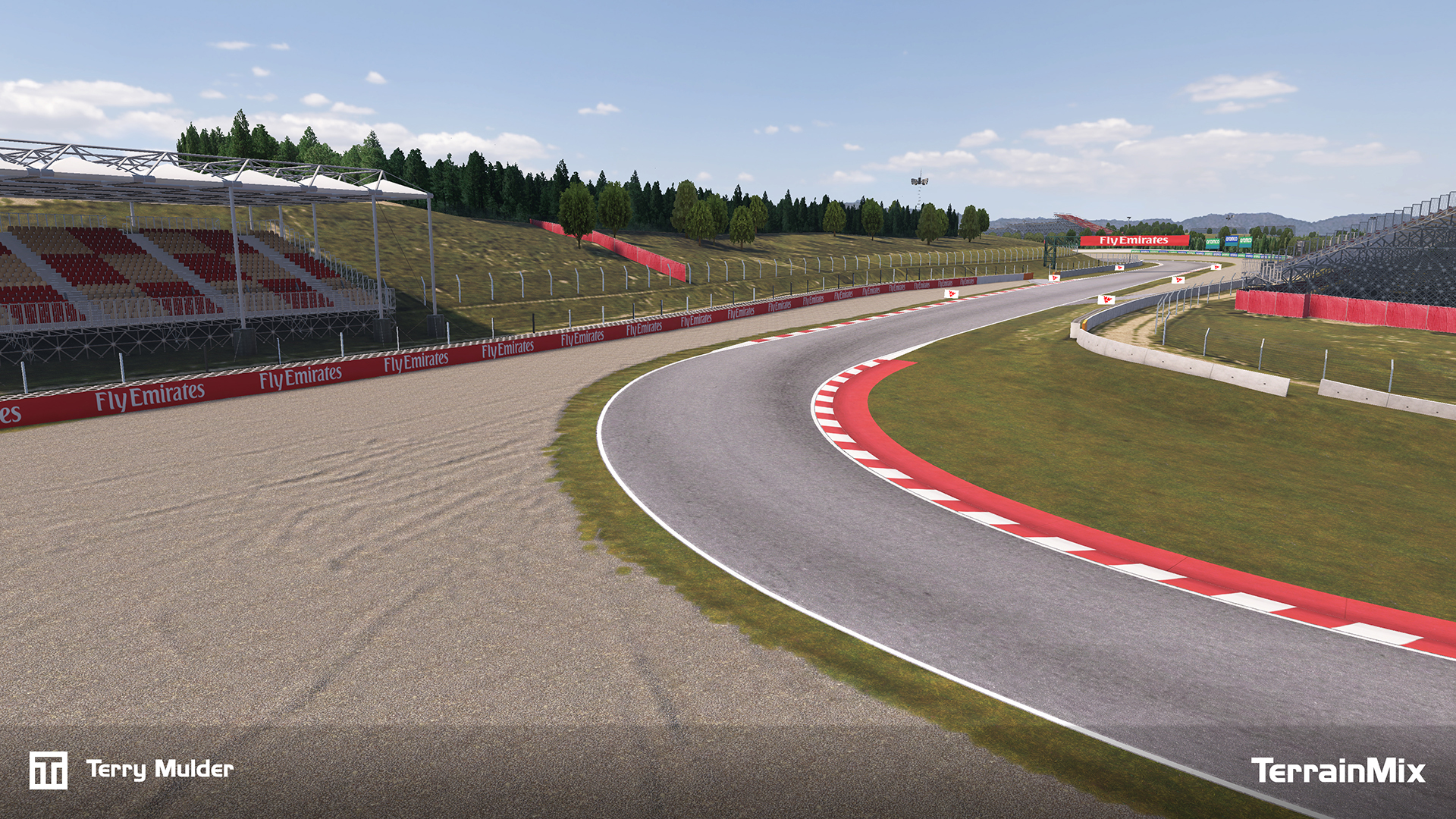
To improve the visual quality of track runoff areas and remove harsh material borders, I developed a fast blended PBR workflow for grass and gravel transitions. Instead of hard polygon-assigned materials, two full PBR texture sets are blended in the shader using a control map, creating natural, organic transitions.
A cleaned satellite image is used to generate the control texture. The alpha channel defines the grass/gravel blend, while the RGB channels control local light/dark variation and optional color influence. Both are packed into a single texture for efficiency.
The shader blends the materials using world-space mapped texture sets (for consistent scale and reduced tiling) and applies the control map via standard UV mapping from 3ds Max. This keeps the setup lightweight, flexible and compatible with existing pipelines.
Optional height and normal blending is used to fake volume where grass sits on top of gravel, with gravel height information driving the blend so grass naturally starts growing between the stones first, resulting in a more believable transition.
This approach delivers:
- Soft, natural transitions
- Rapid setup (typically a few hours per track)
- Minimal manual material work
Ideal for large-scale racing environments under tight production schedules.
Cruden Tarmac – LiDAR-Driven PBR Road Shading
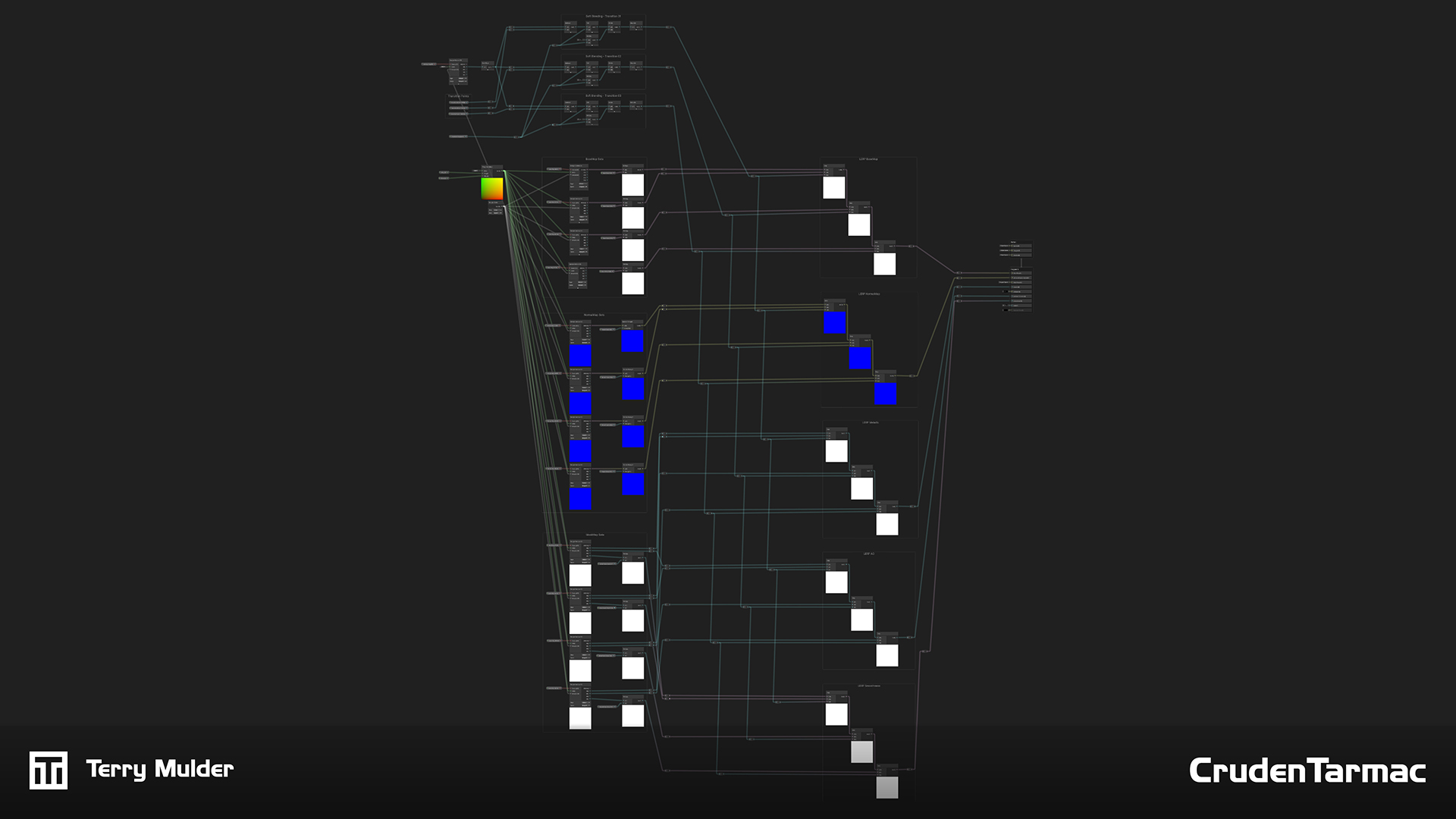
Because tarmac quality is critical in driving simulators, I developed a custom tarmac workflow to significantly improve road realism and consistency. A dedicated Substance Designer graph is used to generate standardised PBR tarmac texture sets (Tarmac Texture Generator).
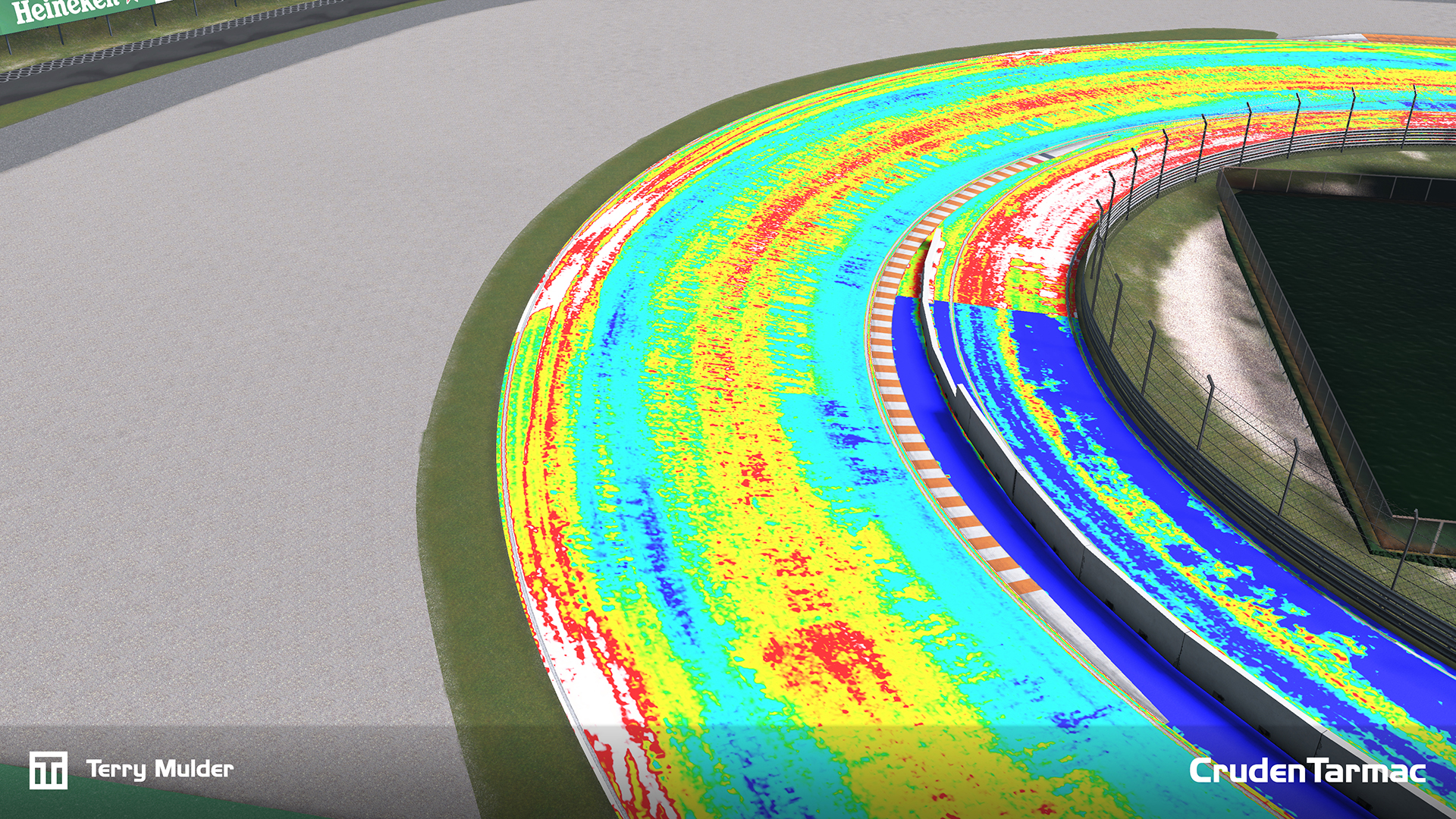
Our LiDAR point clouds contain intensity data (grayscale light/dark information per scan point). This data is baked onto the road surface into multiple textures and used as a high-frequency detail source that would be extremely time-consuming to reproduce manually.
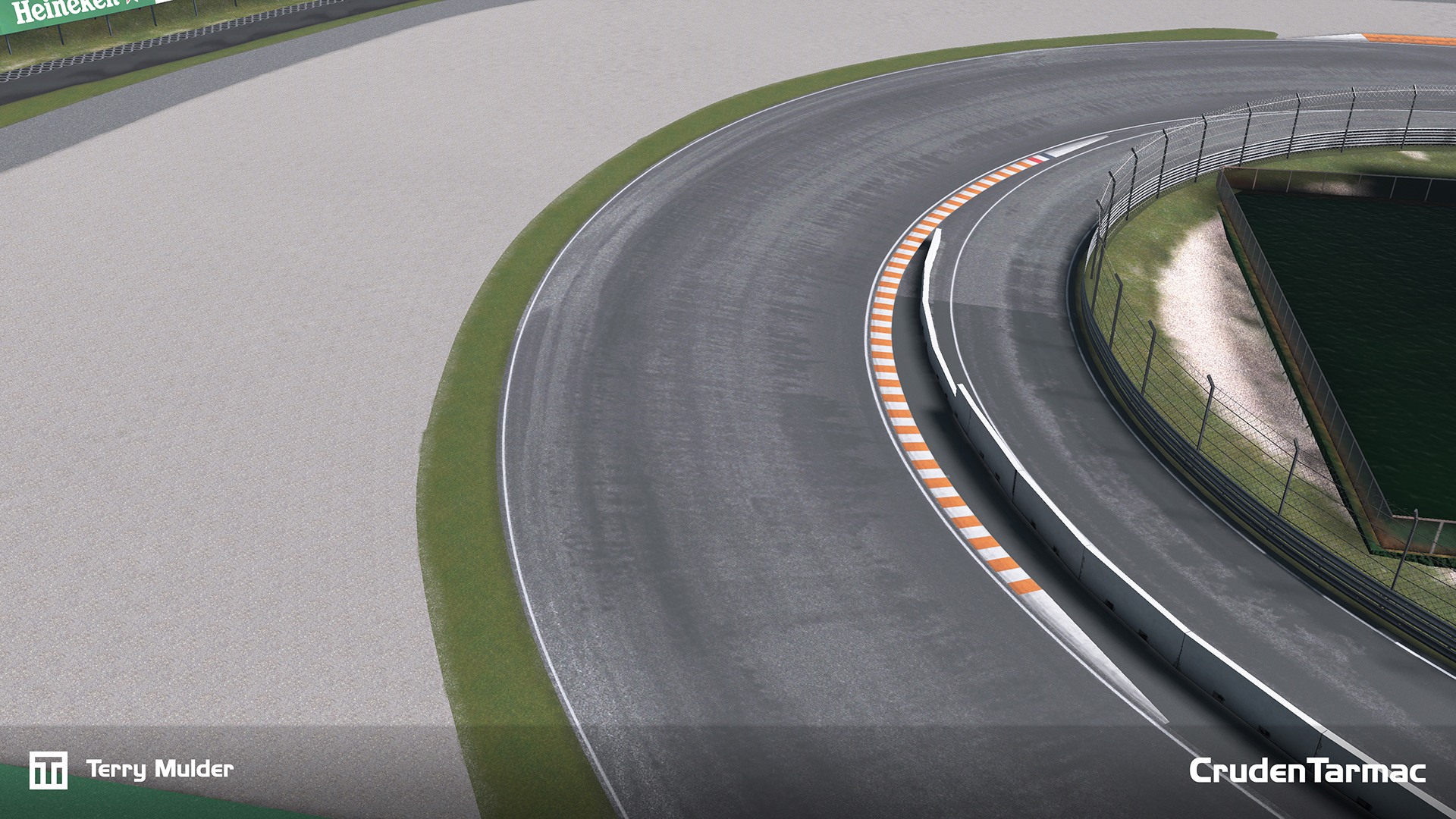
In a custom shader, multiple tarmac texture sets are blended based on the color range of the LiDAR intensity data, introducing subtle variation, patching and wear patterns that closely match the real-world environment.
The workflow is optimised for production:
- Most effort is in UV optimization, which are required as part of track development anyway and LiDAR baking
- The tarmac texture sets remain standardised, but can be modified easily when required
- Material configuration can be done in minutes per track
This method achieves natural, nuanced tarmac detail while minimizing manual work, making high-quality surfaces achievable even under tight schedules.
Tools used